Automation has a reputation for being complicated and expensive. But the automations that save small businesses the most time are usually tiny. An email at the right moment, a calendar that keeps itself up to date, a file that imports itself every Monday.
An email when something happens
The simplest automation is a notification. When a new urgent job is created, email the on-call manager. When a job is closed, email the customer contact. Each one replaces a phone call or a reminder somebody would otherwise have to remember.
A calendar feed
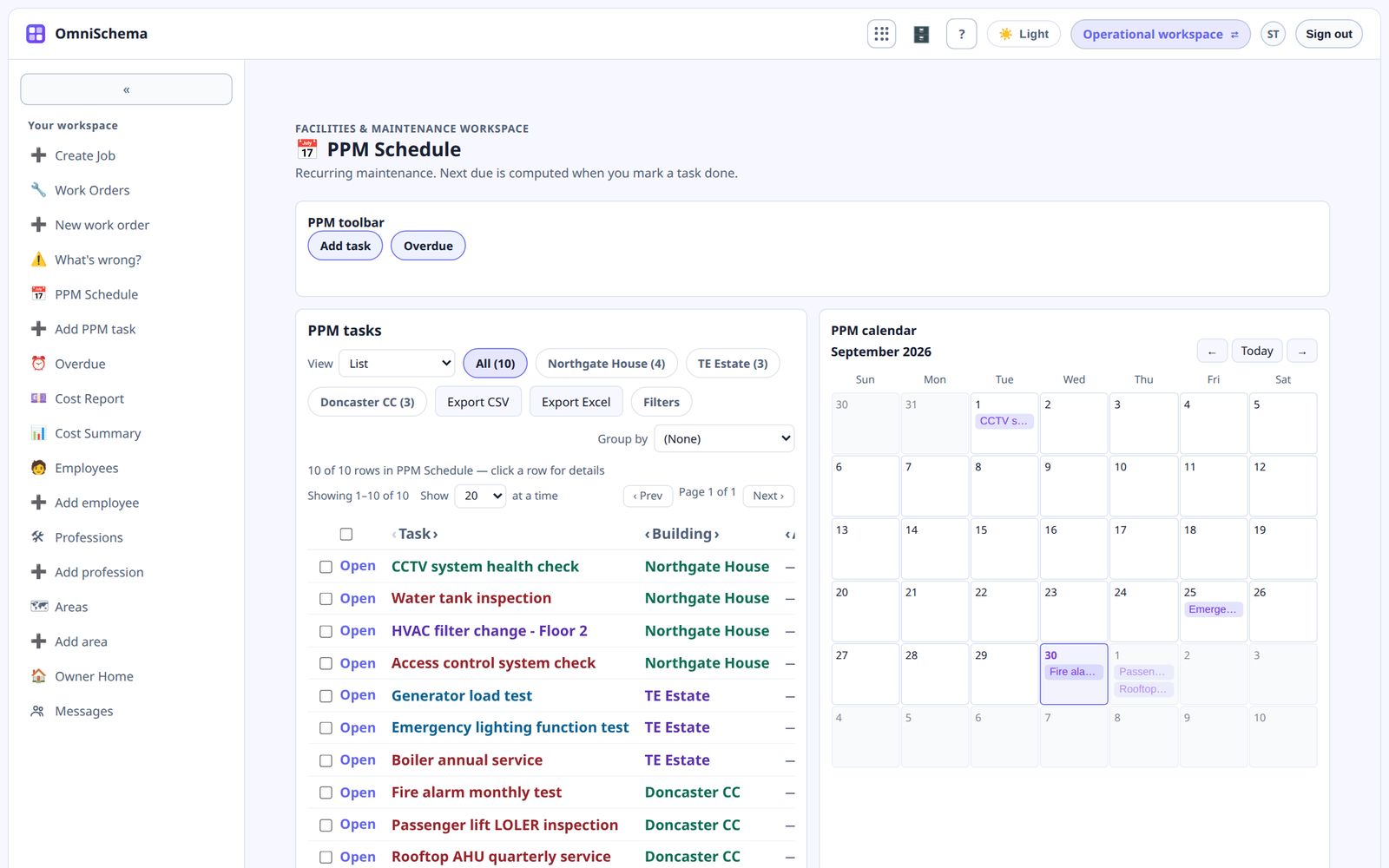
If planned tasks, shifts or due dates live in your system, a calendar feed lets people see them in the calendar they already use on their phone or laptop. It updates itself, so nobody copies dates across by hand.
Sending data to other systems
Sometimes another system needs to know when something changes, like an accounts package or a client's own portal. A webhook sends the details across automatically the moment it happens.
Receiving data from other systems
The reverse is useful too. If another system produces jobs or meter readings, it can send them straight in instead of someone retyping them.
Files that import themselves
Some suppliers and clients send the same spreadsheet every week. If that file can be picked up and imported automatically, that's a weekly chore gone.
Keep automations under control
- Only automate what's clearly repetitive.
- Be careful what goes out, especially costs and personal details.
- Make sure someone knows each automation exists.
OmniSchema includes outgoing emails and webhooks, incoming webhooks, calendar feeds and automatic file pickup. They follow the same permissions as your staff, so an automation won't send out cost figures that the person who set it up isn't allowed to see.