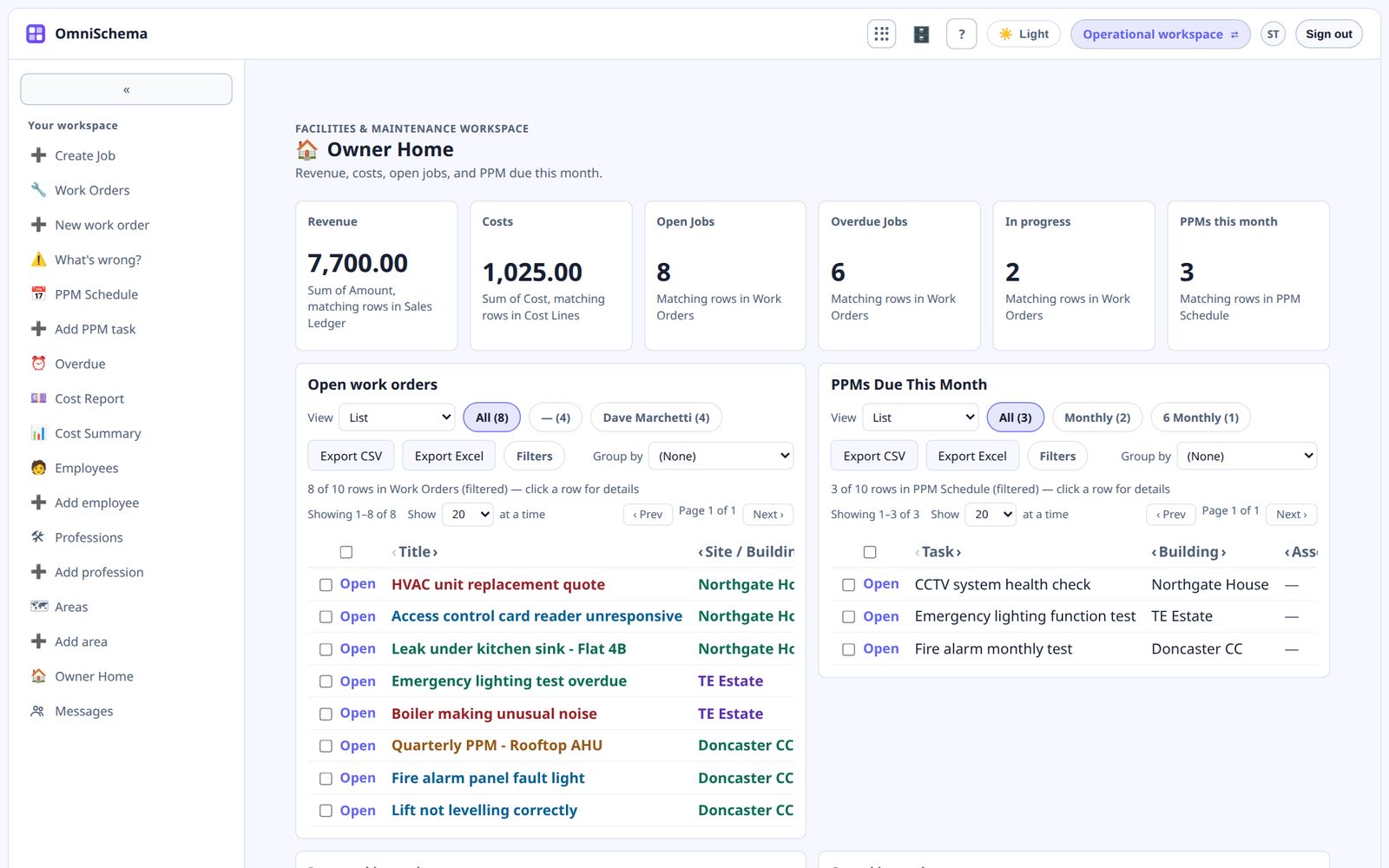
Most small operations businesses go through the same growing pains. At five people everyone knows everything. At fifteen, things start slipping through the cracks. At thirty, the owner is overwhelmed and the systems that worked at the start are holding everyone back.
What changes as you grow
More people need to know things, but not everything. Work spreads across more sites, customers and teams. You need managers, and managers need oversight. Mistakes cost more and are harder to trace. Customers expect a more professional operation.
Signs your systems aren't keeping up
- The owner is the bottleneck for every decision.
- Information is duplicated across several tools.
- New starters take weeks to get up to speed.
- Nobody trusts the numbers without checking them first.
Build for the next stage, not the final one
You don't need a system built for a two-hundred-person company. You need one that works now and can grow without being thrown away. That means one place for your core work rather than a new tool for every problem, roles and visibility you can tighten as you add people, processes that don't live in one person's head, and the ability to change how things work without starting again.
Add structure gradually
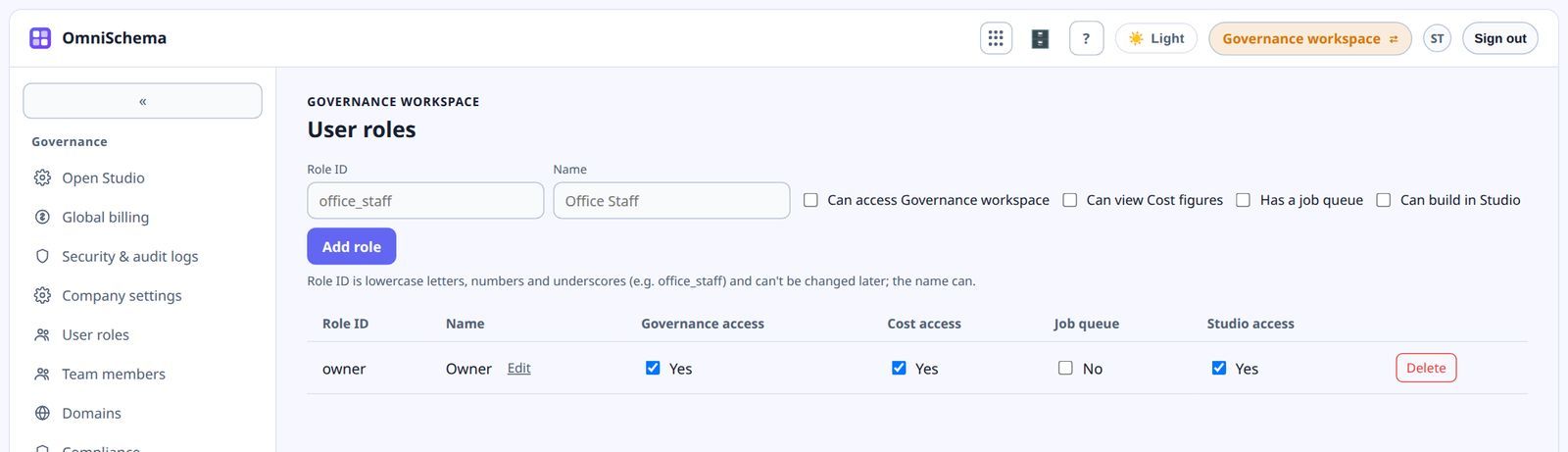
At five people, everyone can see everything. At fifteen, engineers see their own jobs and the office sees the lot. At thirty, site managers see their sites and costs are limited to a few people. Each step should be a setting change, not a new system.
Keep what works
Growing doesn't mean throwing everything out. The way your team already works has real value. Good systems capture it and make it consistent, instead of replacing it with somebody else's idea of how you should run.
OmniSchema is built for this journey. Start with the kits you need today and add more as you grow. Visibility can move from Everyone to Assigned to me or In my sites as the team gets bigger, and Studio lets you change pages and forms as your processes change, without moving your data anywhere.