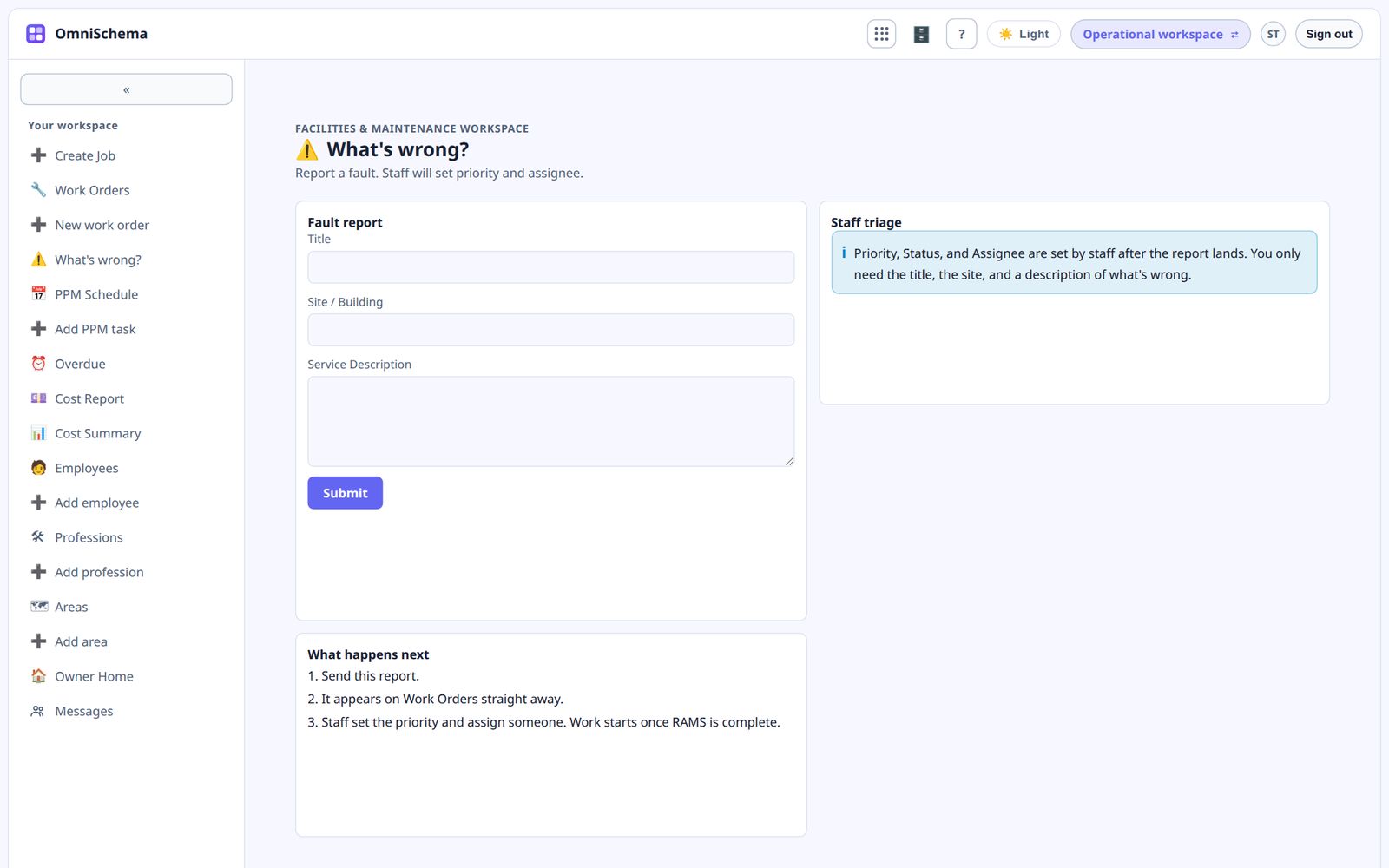
Property managers sit in the middle of everything. Tenants report problems, landlords want costs kept down, contractors need clear instructions, and the compliance deadlines never stop coming. Most of it runs on email and phone calls.
How a typical repair goes
A tenant reports a problem. The property manager decides whether it's urgent and who's responsible. A contractor is instructed. The work gets done, hopefully. The tenant gets told, eventually. The landlord gets invoiced at some point. Every step is a chance for delay.
Start with the property and the unit
Every repair needs to be tied to the right building and the right unit. A clear list of properties and units, each with its landlord and tenant, means nobody has to ask "which flat was that again?"
One way for tenants to report
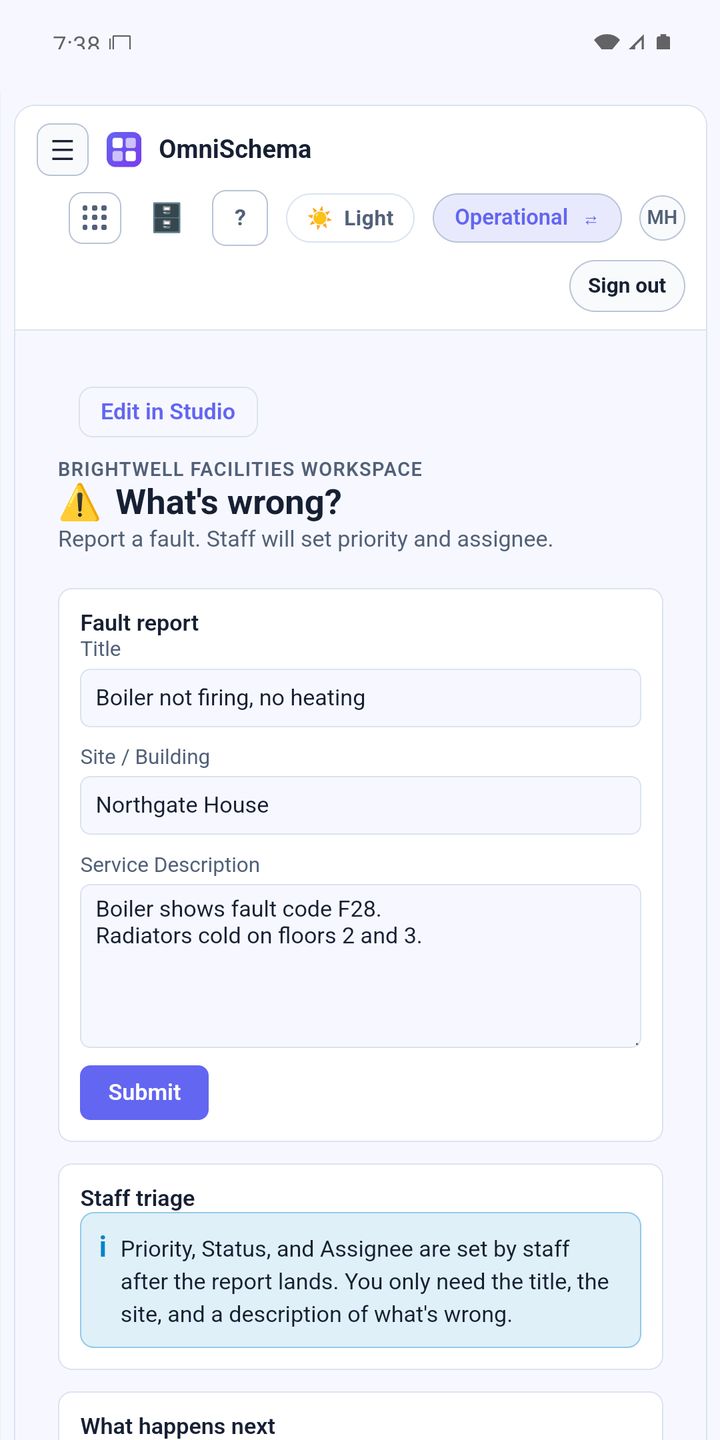
Give tenants one simple way to report a problem: a short form that works on any phone. Each report becomes a job straight away rather than an email waiting to be read.
Decide, then instruct
Not every report is a job for a contractor straight away. Some need the landlord's approval first. Some are the tenant's responsibility. Record the decision, then instruct the right person.
Keep compliance next to repairs
Gas safety records, electrical reports and fire risk assessments belong to the same properties. Keeping them in the same system as repairs gives you the full picture for each building.
Keep people updated
Most follow-up calls are just people asking for news. Clear statuses that the right people can see cut those calls right down.
OmniSchema's Property Management kit includes properties, units, tenants and a tenant request form that creates real jobs. Jobs link properly to the property they relate to, compliance certificates can sit alongside, and visibility settings decide who can see which properties.