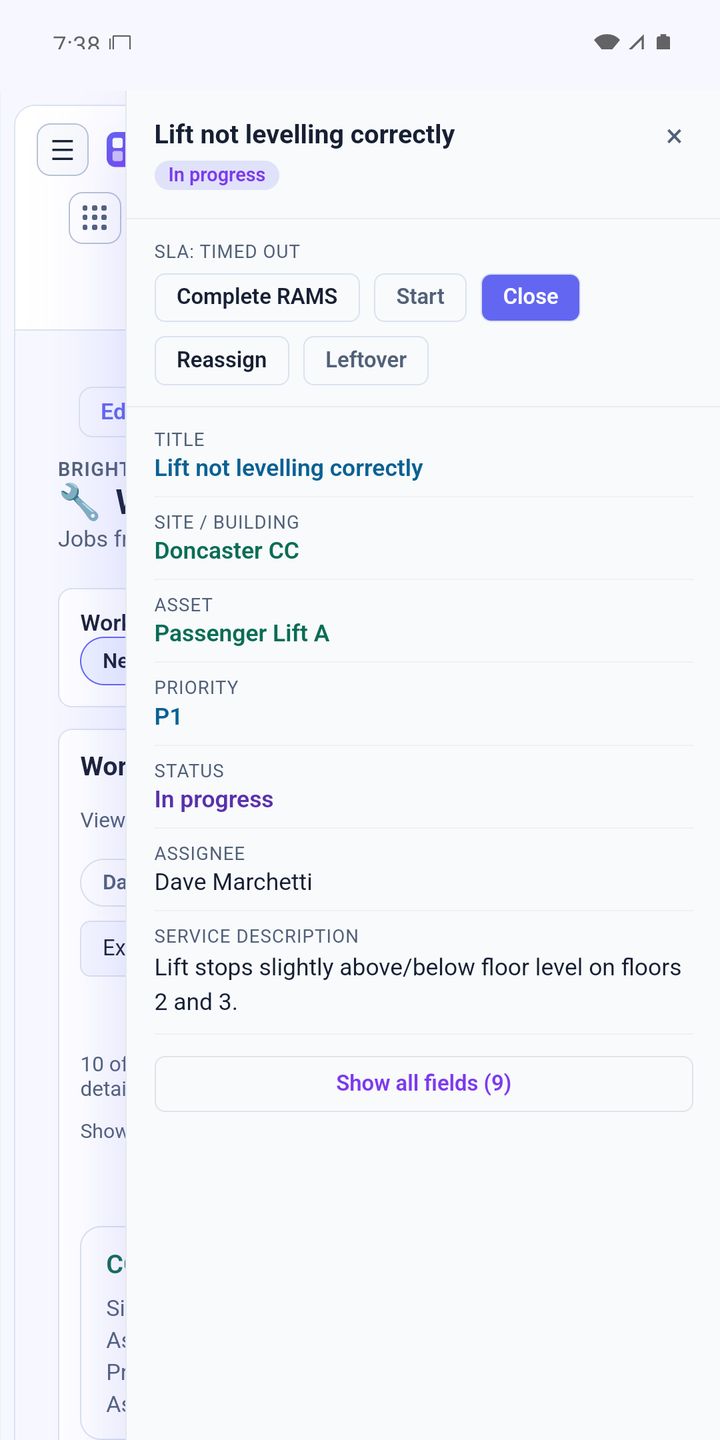
Phones have made it effortless to take photos on site. The result, in a lot of businesses, is thousands of unlabelled pictures on engineers' personal phones with no link to the jobs they belong to.
Photos worth taking
- Before: the problem as you found it.
- During: anything hidden once the work is finished, like pipework inside a wall.
- After: the completed work.
- Labels: rating plates and serial numbers.
- Concerns: anything unusual or unsafe the customer should know about.
Why they matter
They settle disputes about what was found or done. They help the next engineer understand the history. They show customers the quality of the work. And they record equipment details for the asset register without anyone typing them.
Keep them on the job
A photo on an engineer's phone is invisible to everyone else and leaves when they do. A photo attached to the job is part of the business's record, available to anyone who can see that job.
Documents too
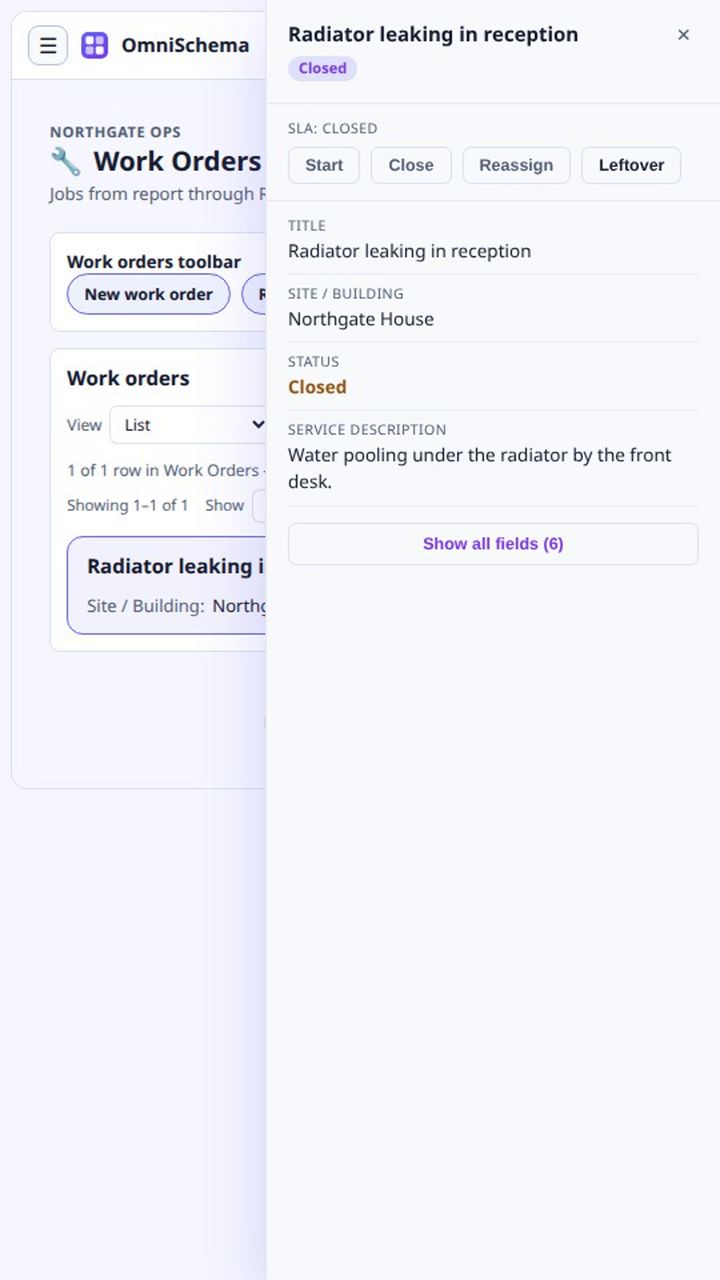
Certificates, quotes, manufacturer instructions and signed forms all belong with the record they relate to, whether that's the job, the asset, the building or the certificate.
Keep files secure
Photos can show people, homes and security details like alarm panels and key safes. Files should only be visible to people who can see the record they're attached to, and they shouldn't be reachable by anyone who happens to guess a link.
Keep sizes sensible
Very large files are slow to upload from a site with poor signal. Most phone photos are more than good enough once resized.
OmniSchema lets you attach images and files to records. They're stored securely, with checks on who is allowed to open them, files are checked to make sure they really are the type they claim to be, and a sensible size limit keeps uploads quick on site.