In-house facilities and estates teams have an odd problem. When they do their job well, nobody notices. The heating works, the lifts run and the fire doors close. They only get noticed when something goes wrong.
That makes it hard to argue for budget, staff or equipment, because the value of prevention is invisible.
Make the work visible
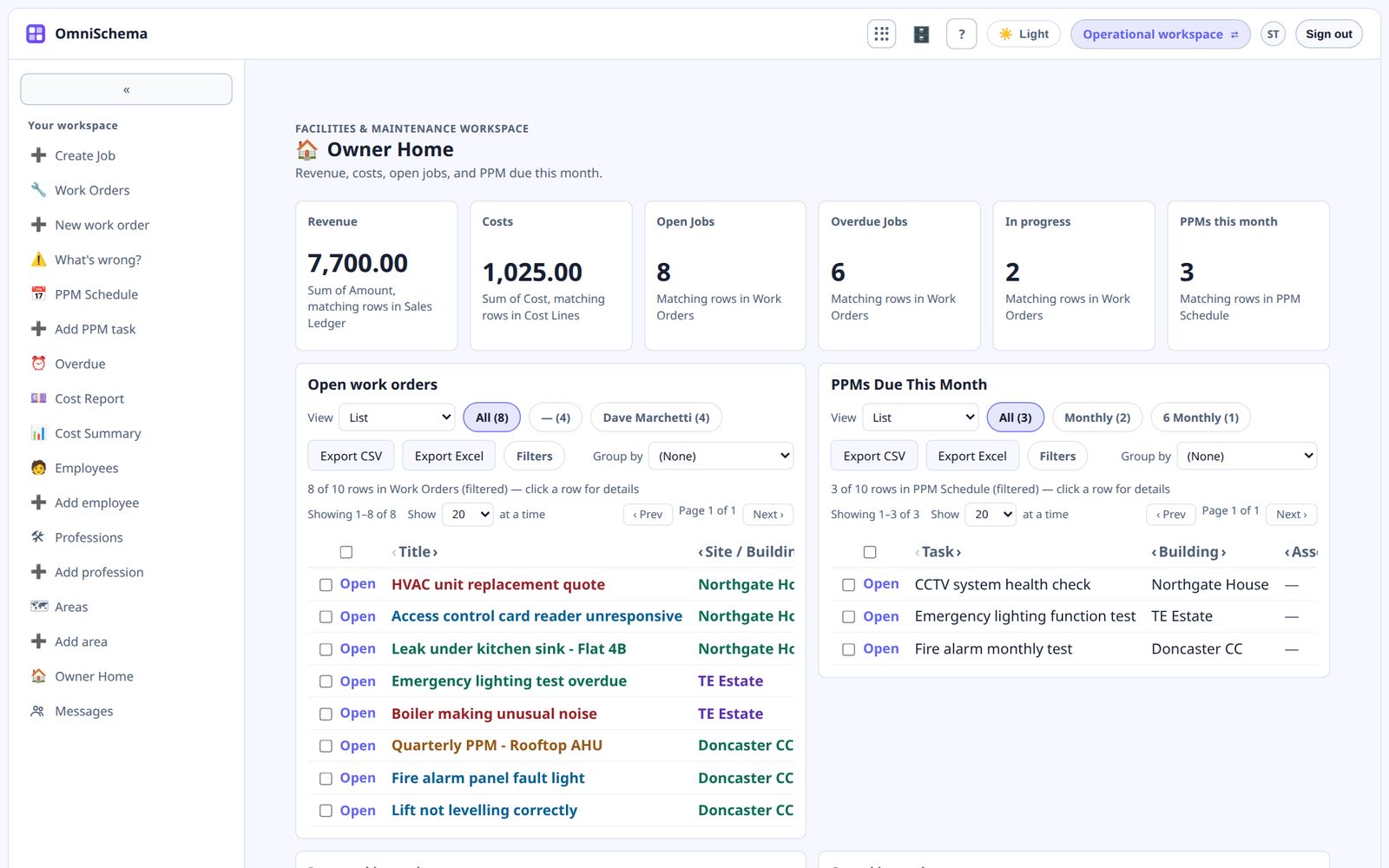
The answer is data. Not complicated reports, just clear numbers that show what the team does:
- jobs completed this month, by type
- average time from report to fix
- planned maintenance completed on time
- compliance checks up to date
- recurring faults by building or equipment
Show response times
Response time is what other departments care about most. Being able to show that urgent jobs are started within a couple of hours, on average, builds real confidence.
Show prevention
Planned maintenance done on time is the clearest sign of a well-run team. Tracking it protects you too. If a planned task was deferred because of budget, the record shows whose decision that was.
Make reporting easy for colleagues
Colleagues should be able to report a problem in seconds, from their phone or desk, without hunting for the right email address. Easy reporting means problems are found earlier, while they're still small.
Use the data to ask for resources
When you can show that one building generates a third of all reactive jobs, or that a particular boiler has broken down six times this year, a request for investment becomes a simple business case instead of a plea.
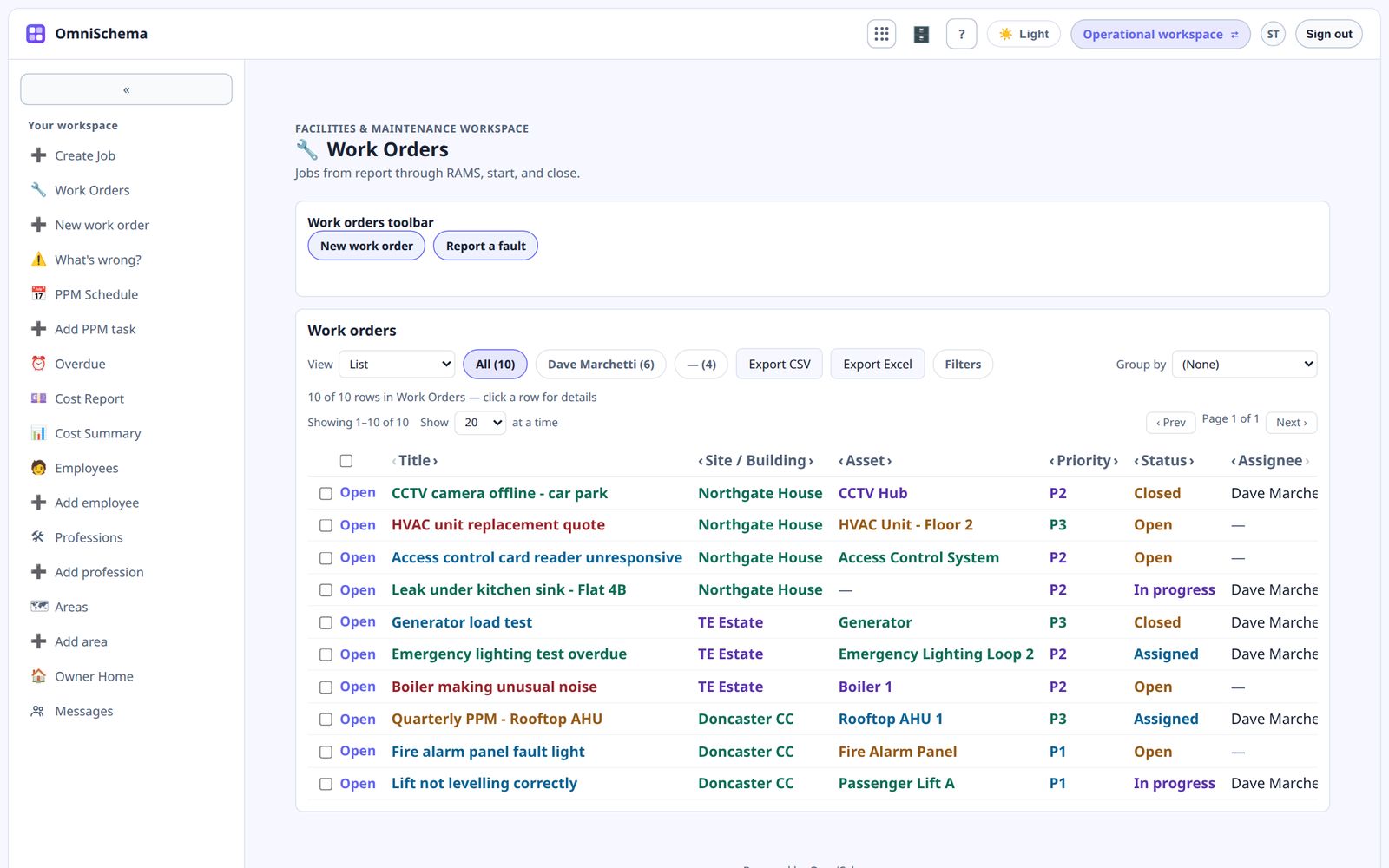
OmniSchema gives facilities teams work orders, planned maintenance, assets and compliance in one place, with a fault report form any colleague can use. Because every job records its own times, dashboards showing response times, completion rates and overdue work are built from real data.