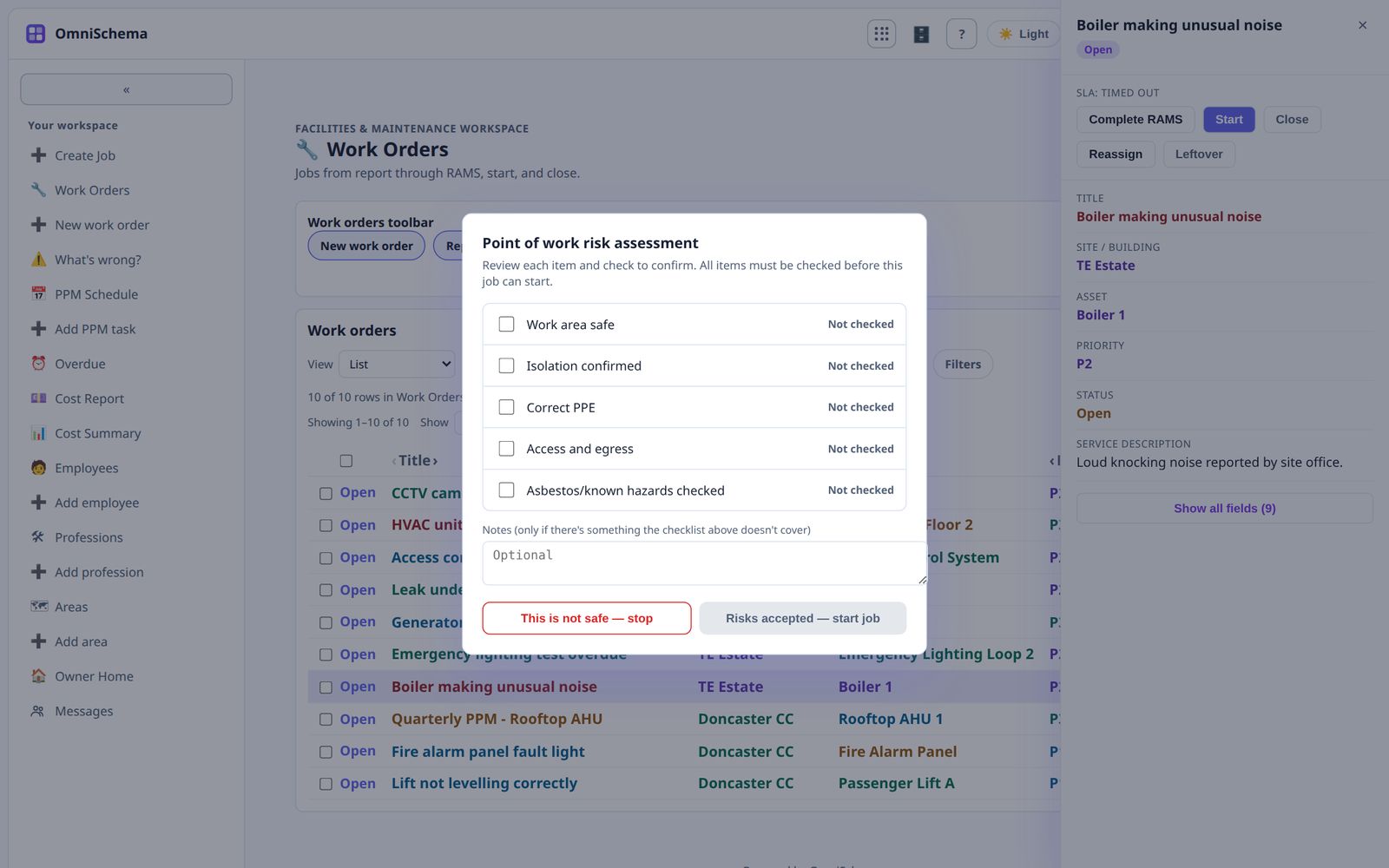
Ask an operations manager for their biggest frustration and "the engineers won't fill in the paperwork" will be near the top of the list. It's tempting to treat that as a discipline problem. Nine times out of ten it's a design problem.
It's asked for at the wrong moment
A form handed over at the end of a long day gets rushed. A form that has to be done back at the office gets forgotten. The time to capture information is when it happens: the safety check just before starting, the notes just before leaving.
It asks for too much
Twenty fields, half of which don't apply to this job, tell the engineer nobody designed the form with them in mind. Every field you remove makes the others more likely to be filled in. Only ask for what you'll actually use.
It asks for things the system already knows
Engineers shouldn't type the date, their own name, the job number or the address. The system knows all of those. Every field that fills itself in is one less reason to skip the form.
It's painful on a phone
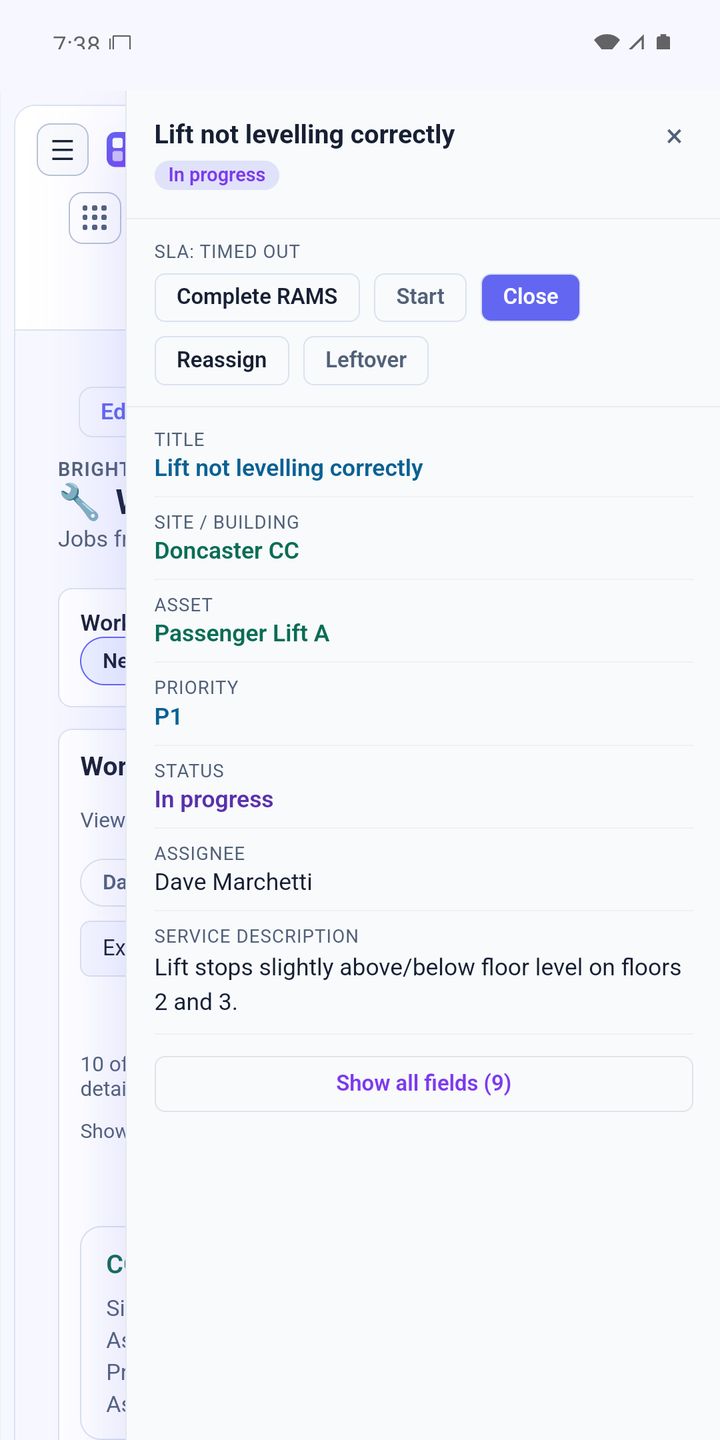
Wide tables, tiny text boxes and dropdowns with fifty options are hard work on a phone in a basement with one bar of signal. Forms for people in the field need big buttons, short lists and as little typing as possible.
Nobody sees why it matters
If engineers never see anything happen with what they record, they stop recording it carefully. Show them the payoff: fewer repeat visits, invoices paid faster, and a clear record of good work when a customer complains.
In OmniSchema the safety check appears when an engineer taps Start and the notes appear when they close the job. Names, dates and times come from whoever is signed in. It all works in an ordinary phone browser, and you choose exactly which fields each form shows, so nobody is asked for something they don't need.