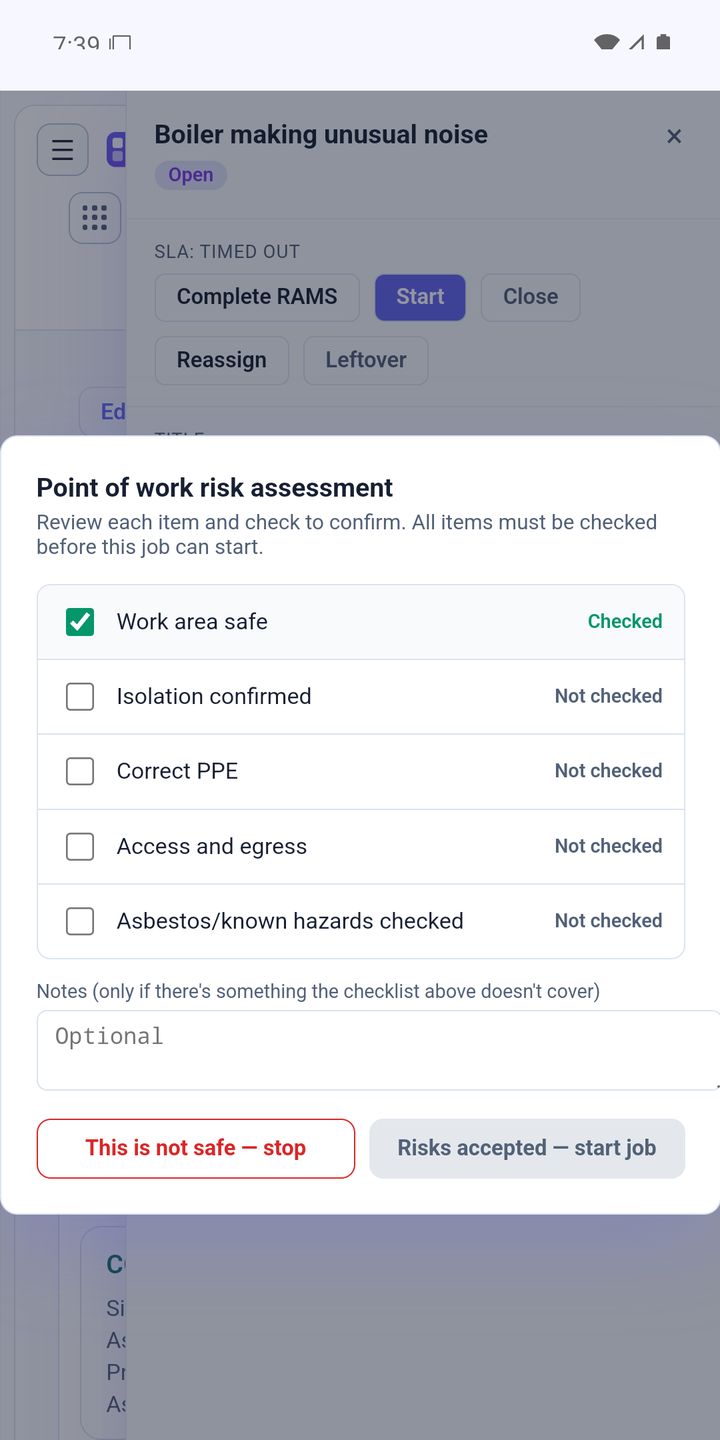
Every maintenance business knows someone should check the work area before a job starts. Most have a risk assessment and method statement (RAMS) in a folder somewhere. The honest question is how often the check actually happens on site, on a wet Thursday, when the engineer is already forty minutes behind.
Why long forms get skipped
A form with twenty free-text boxes for hazards and controls looks thorough. In practice it gets filled in afterwards, filled in with "as previous", or not filled in at all. It turns into paperwork that has nothing to do with the moment the risk actually exists.
Short and specific wins
The check that gets done is short, specific and happens at the right time, just before work begins. For most reactive maintenance, five questions cover the essentials:
- Is the work area safe?
- Has isolation been confirmed where it's needed?
- Is the right protective equipment being worn?
- Are access and exit routes clear?
- Have asbestos and other known hazards been checked?
Each is a tick, not an essay, with a notes box for the rare case where something needs saying.
Make stopping as easy as starting
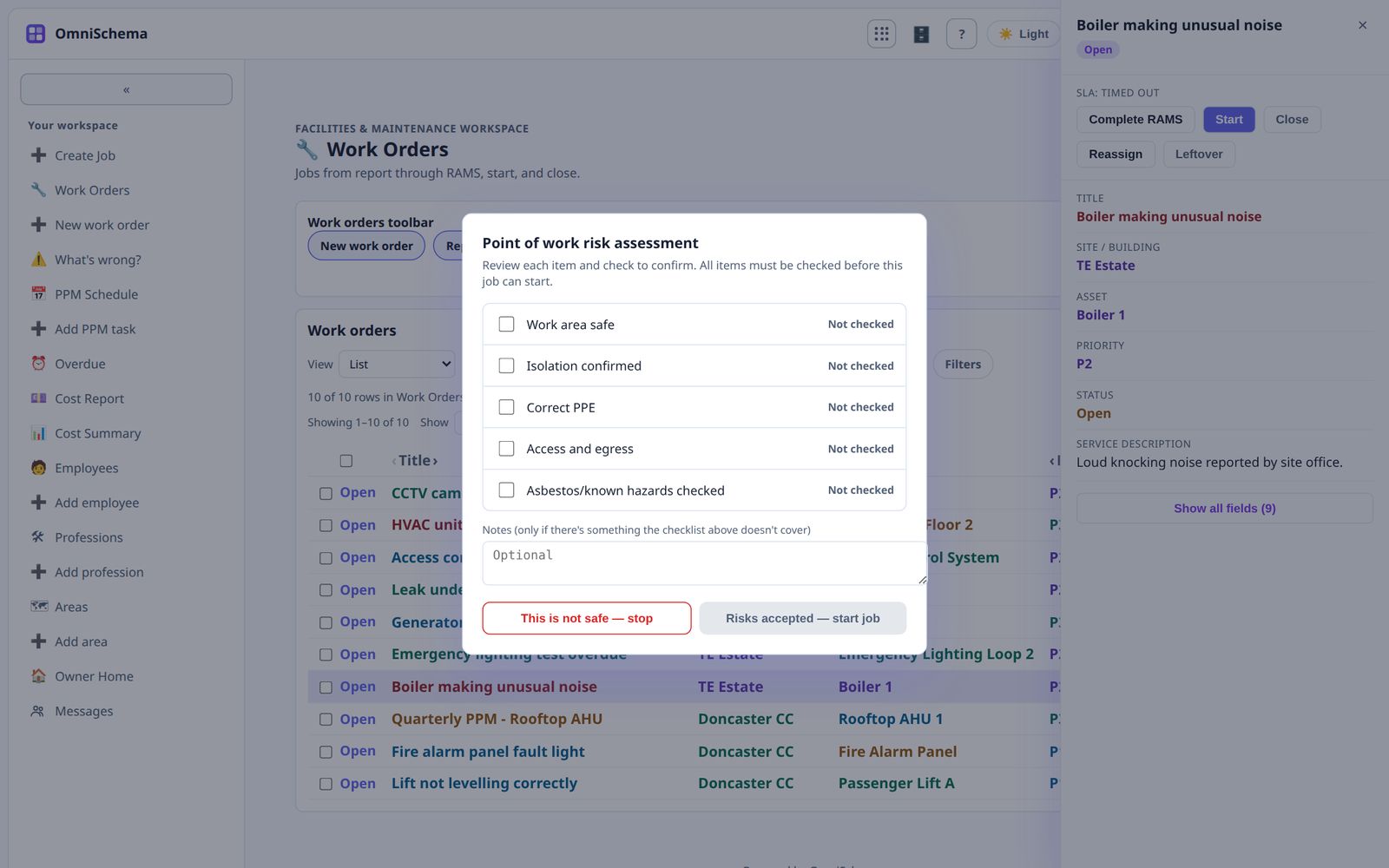
A good check has two outcomes. Either the risks are accepted and the job starts, or the engineer says "this isn't safe" and stops. Stopping should be one tap, recorded against their name, and treated as the right call rather than a failure.
Keep it on the job
The check belongs on the job record, signed by whoever is signed in, with the time recorded automatically. Then, if anyone ever asks whether a check was done before a particular job, the answer is right there.
Don't let work start without it
The design choice that makes the biggest difference is simple. The job can't be started until the check is complete. Not a reminder. A lock.
This is how it works in OmniSchema. When an engineer taps Start, the checklist appears first. They tick it and start, or they stop the job. Either way, it's recorded against their name, on the job, at the time it happened.