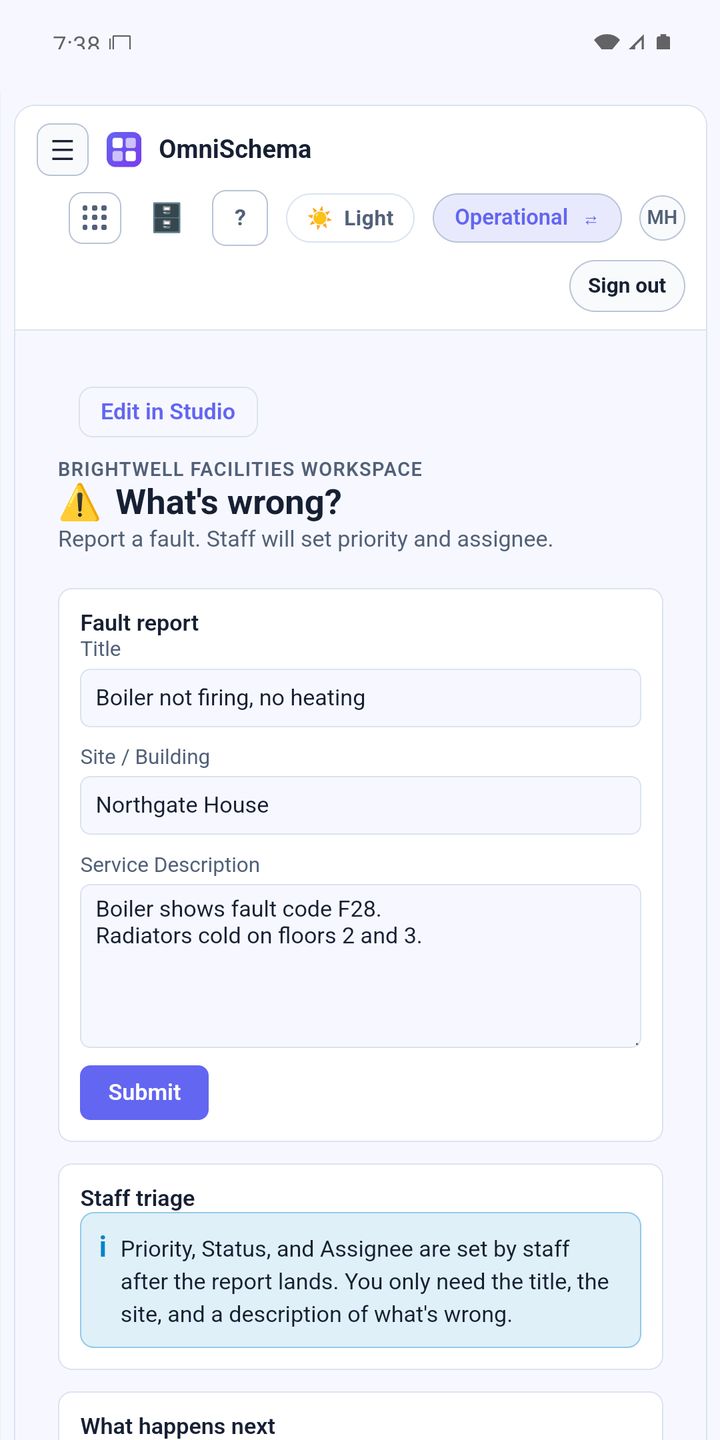
Take one ordinary job. A receptionist rings at twenty past nine: the radiator by the front desk is leaking and there's water on the floor. Simple enough. But between that phone call and the invoice, the job will pass through four or five people and at least three tools. Every hand-over is a chance to drop something.
The call
Whoever answers writes it down. Maybe on a pad, maybe straight into the group chat. The address is there and the problem is roughly there. How bad it is usually isn't, and neither is the caller's direct number.
Deciding who goes
Now the office has to pick an engineer. That depends on who's nearby, who's free and who can deal with a leaking valve, and all of that lives in somebody's head. The chosen engineer gets a message with the details copied across by hand. Each copy loses a little.
The visit
The engineer turns up, checks the area, fixes the valve and maybe takes a photo. The safety check almost never gets written down. What was actually done ends up in a text, on a sheet in the van, or nowhere at all.
Closing it
The office finds out the job is finished when the engineer mentions it, or when somebody remembers to ask. Parts and time on site get pieced together later from memory.
The invoice
Finally someone builds the invoice. They need the billing contact, a description of the work and the costs. Thin notes make a thin invoice, and a thin invoice gets queried and paid late.
One record from start to finish
The fix isn't working harder. It's making fewer copies. If the job is created once, straight from the report, and everyone works on that same record, the details can't drift apart.
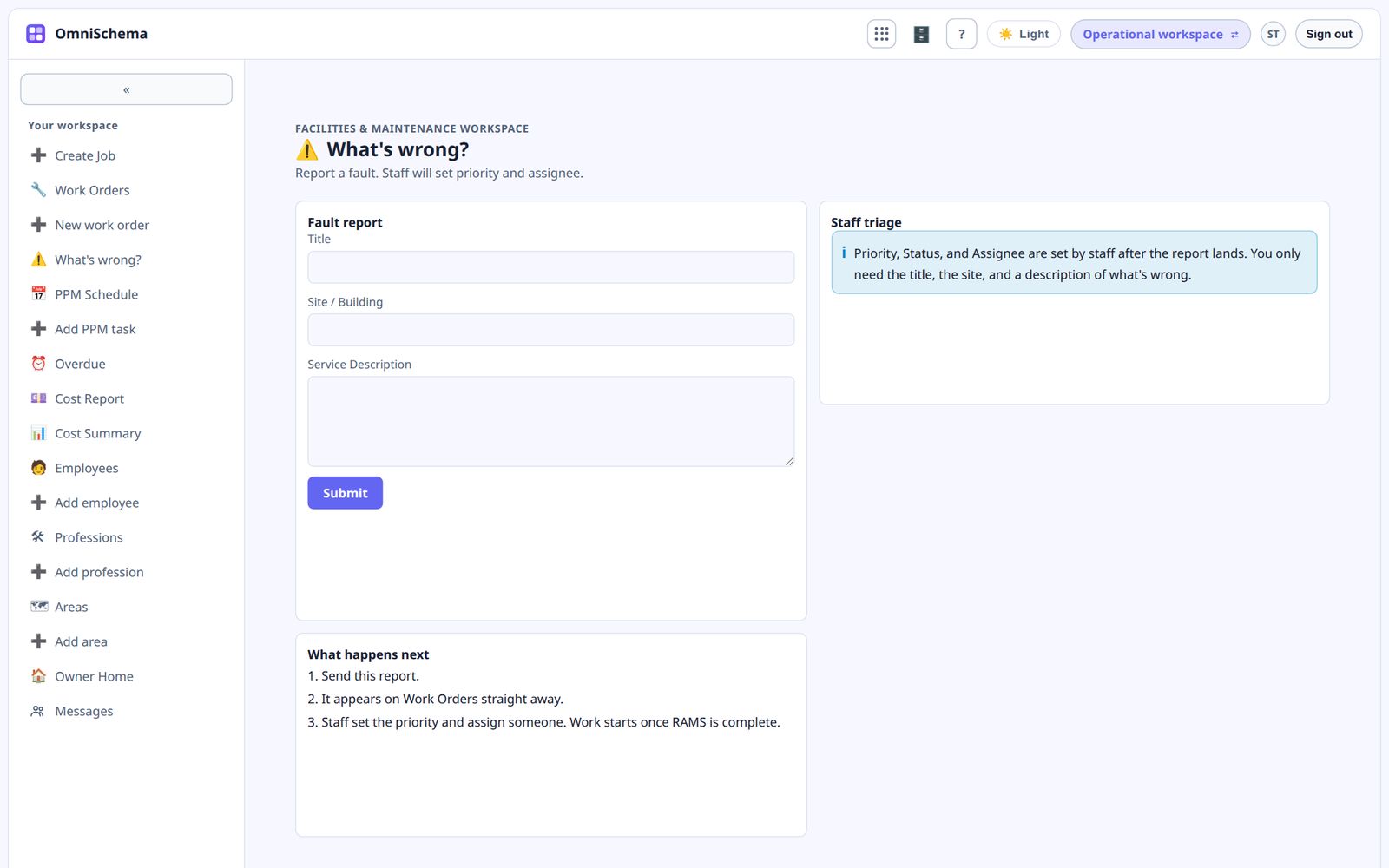
The office sees the status change when the engineer starts and closes the job. The times record themselves. The safety check is signed on the job. And the invoice is built from what was actually logged, not from what someone thinks happened.
That's how jobs work in OmniSchema. A report becomes a job, the job gets started and closed with the people and times attached, and the notes carry through to the invoice.