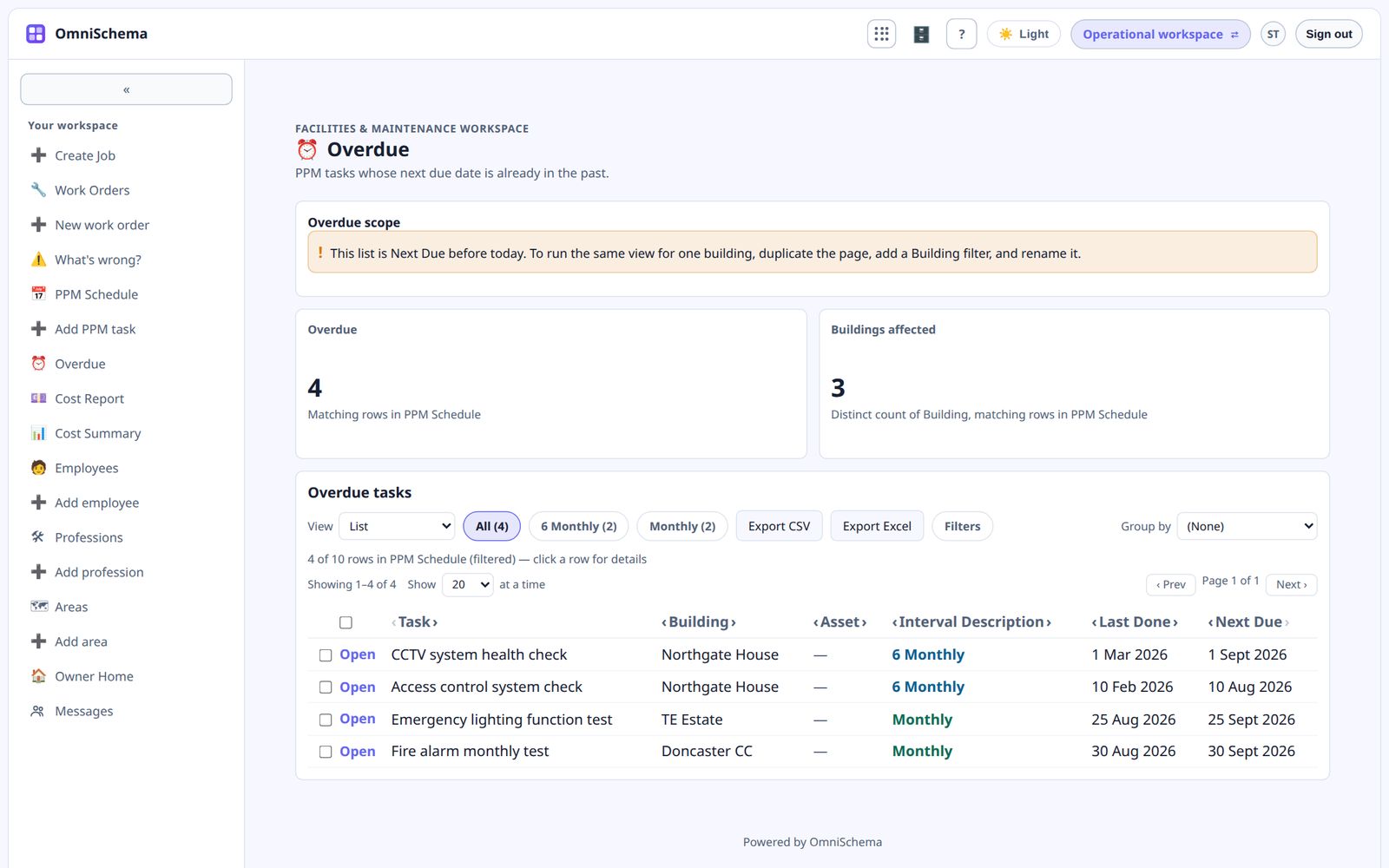
Buildings produce a steady trickle of certificates. Gas safety records, electrical reports, fire alarm and emergency lighting tests, water hygiene checks, lift inspections. In most small firms they end up as PDFs in somebody's inbox or paper in a drawer marked "certs".
The certificate matters, because it shows the check happened. But the part that really needs attention is usually a few lines near the bottom: the defects, observations and recommendations. That's work that still needs doing.
What goes wrong in the drawer
- Expiry dates sail past because nobody is watching them.
- Recommended repairs never become jobs.
- "Are we compliant at this building?" takes an afternoon to answer.
Make each certificate a record
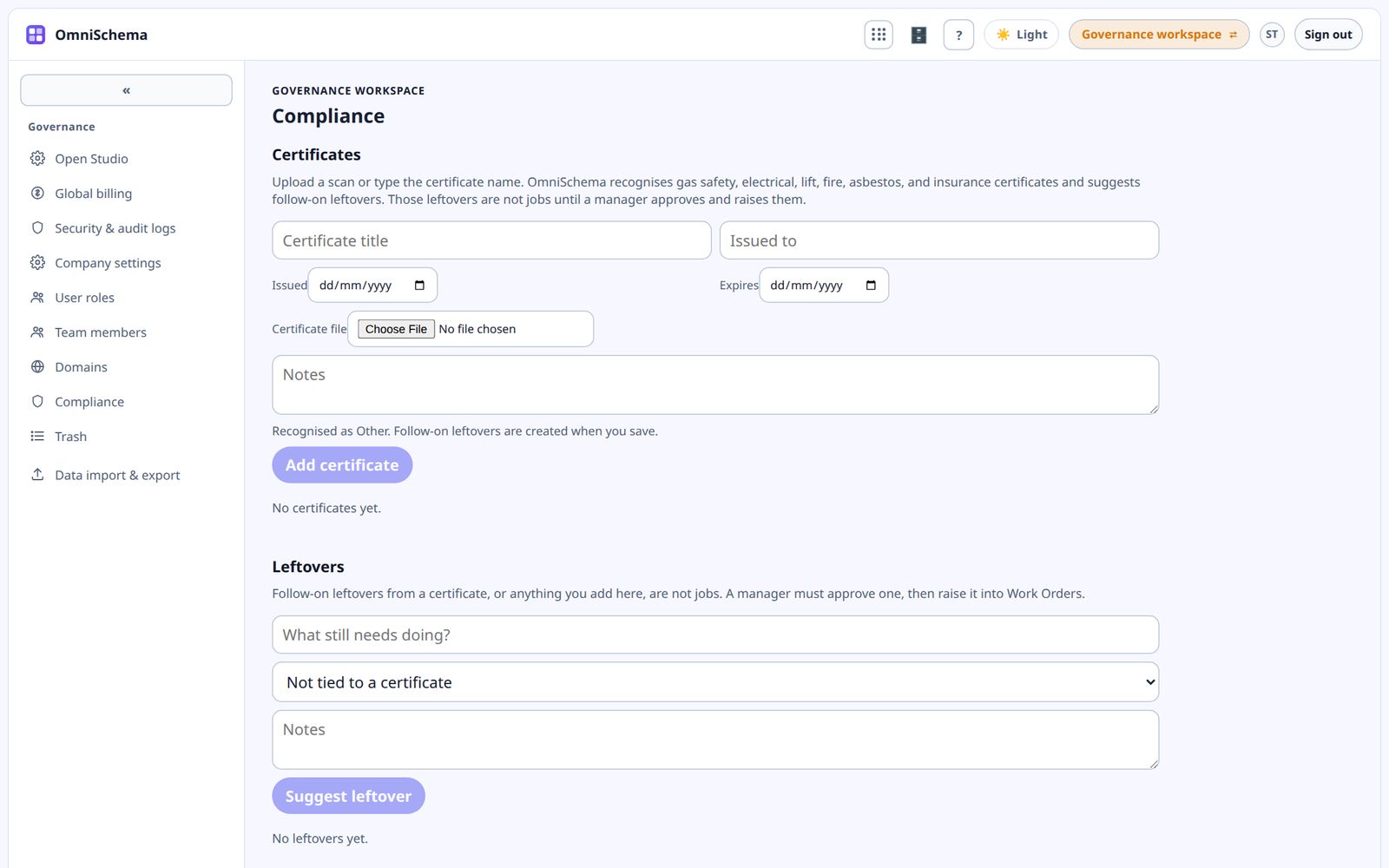
A certificate should be a row in a list with the building, the type of check, when it was done, when it expires and who did it. The PDF is attached, but the facts you need are visible without opening it.
Pull out the leftover work
Most inspections leave something behind. A failed emergency light, a fire door that doesn't close, an advisory about old pipework. Each of those should be its own item, linked back to the certificate it came from.
Let a person decide what becomes a job
Not every observation needs an engineer tomorrow. Some are advisory, some are urgent and some are the landlord's problem. A building manager should look at the leftover items and decide which to raise as jobs, and who gets them.
Close the loop
When a job raised from a certificate is finished, you can show the whole story: the inspection, what it found, who decided to act and the work that fixed it. That's exactly what an auditor, an insurer or a client wants to see.
OmniSchema keeps certificates as proper records with their type, building and dates. Leftover work from each one is listed on its own, and a manager can approve an item and raise it as a real work order with a building, an assignee and a due date in one step.