If you look after buildings in the UK, the same handful of recurring checks come round again and again. This is a plain overview to help you get them organised. It isn't legal advice, and the rules depend on the type of building and how it's used, so always check the current guidance that applies to you.
Gas
Landlords of rented homes must have gas appliances and flues checked every year by a Gas Safe registered engineer and keep the record. In commercial buildings, gas appliances must be kept in a safe condition, and a yearly service is the usual rhythm.
Electrics
In England, private landlords must have the electrical installation inspected and tested at least every five years, which produces an Electrical Installation Condition Report, or EICR. Commercial buildings are usually inspected on a set cycle depending on use. Portable appliance testing has no single fixed legal interval, but a schedule based on risk is sensible.
Fire
For workplaces and the common parts of blocks of flats, the responsible person must carry out a fire risk assessment and keep it up to date. Fire alarms, emergency lighting and fire doors all need regular testing, with the results written down.
Water
Anyone in control of premises should assess the risk from legionella in the water system. The Health and Safety Executive's guidance explains how, and it usually leads to regular temperature checks and flushing outlets that don't get used much.
Lifts and lifting equipment
Lifts and other lifting equipment used at work generally need a thorough examination by a competent person, typically every six or twelve months depending on what it is.
The hard part isn't the rules
None of these rules is complicated on its own. What's hard is tracking dozens of them across many buildings, all with different dates. A workable system needs:
- every check listed per building, with its interval
- the date each was last done and when it's next due
- the certificate or report attached
- any remedial work turned into a real job
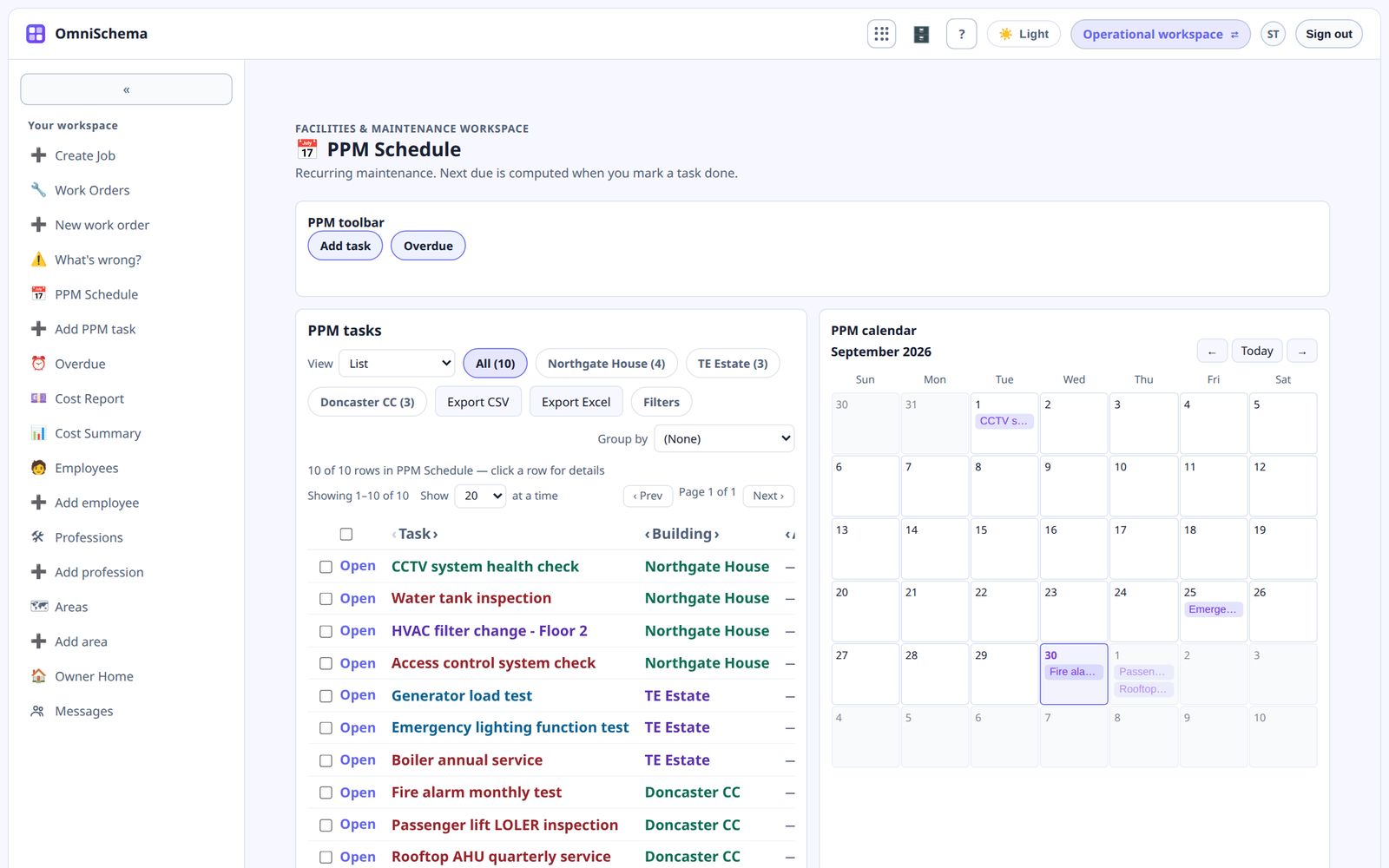
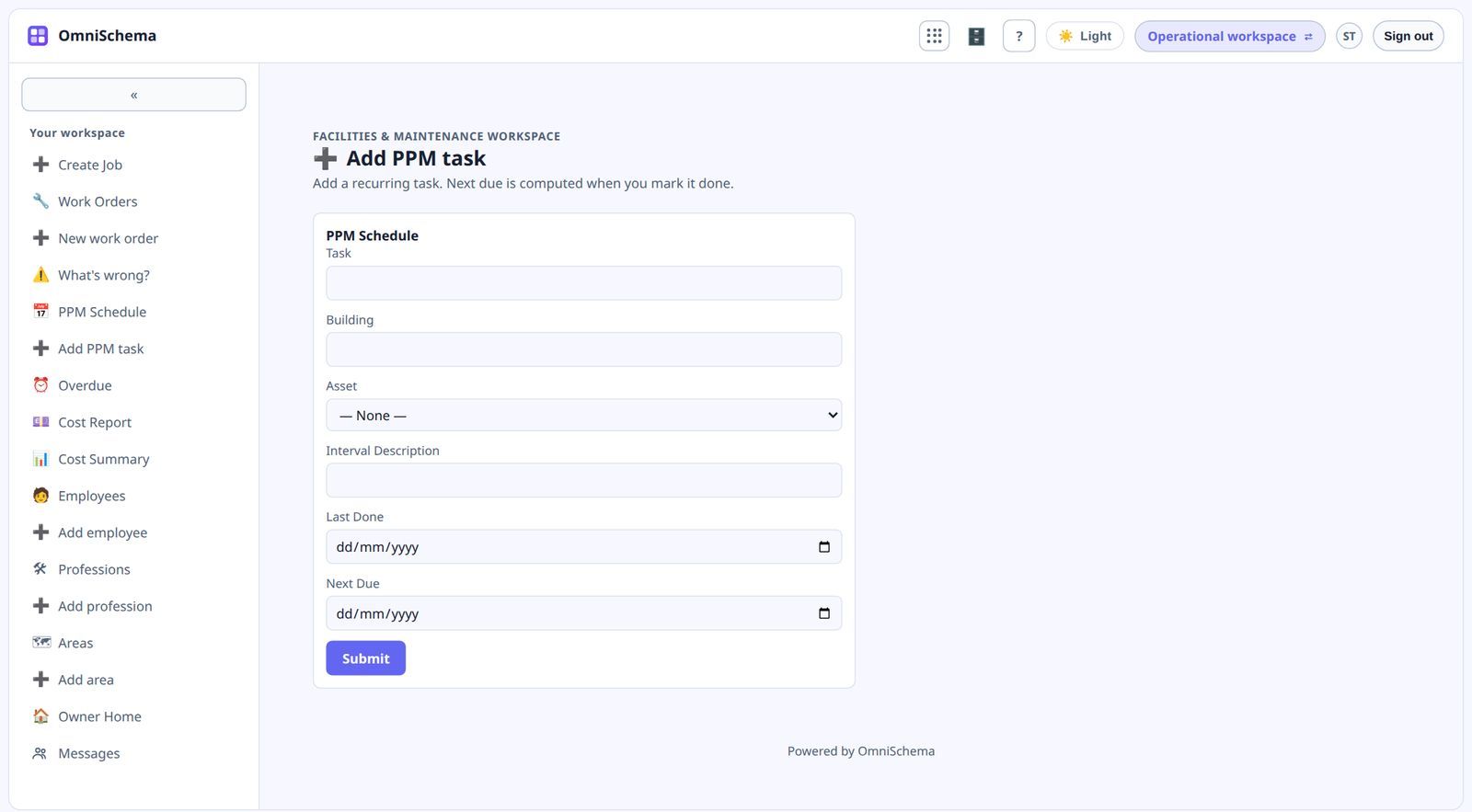
OmniSchema's planned maintenance and compliance tools let you list each recurring check per building with an interval like yearly or every six months, work out the next due date automatically, attach the certificate and raise any remedial work as a job. The owner's dashboard shows anything overdue.