If you plan shifts, you make decisions every week that touch working time law. You don't need to be an employment lawyer, but knowing the basics avoids the most common mistakes. This is a plain summary of the main UK rules for adult workers. It's not legal advice, and some jobs have different rules, so check the current guidance for your own situation.
Weekly hours
Adult workers normally shouldn't work more than 48 hours a week on average, usually measured over 17 weeks. A worker can choose to opt out of that limit in writing, but they can't be made to.
Rest between working days
Workers are generally entitled to 11 hours' rest between working days. A late finish followed by an early start the next morning can break this without anyone noticing.
Weekly rest
Workers are generally entitled to an uninterrupted 24 hours off each week, or 48 hours every fortnight.
Breaks during the day
Workers are generally entitled to a 20-minute rest break if they work more than six hours in a day.
Night work
Night workers have extra protections, including limits on average hours and the right to a free health assessment.
Young workers
Workers under 18 have stricter limits on hours and breaks. If you employ young people, check the rules carefully.
What this means when you're planning
- Watch for late-then-early shift patterns.
- Keep an eye on people who pick up lots of extra shifts.
- Keep a record of hours worked.
- Make it easy to see how much each person is working.
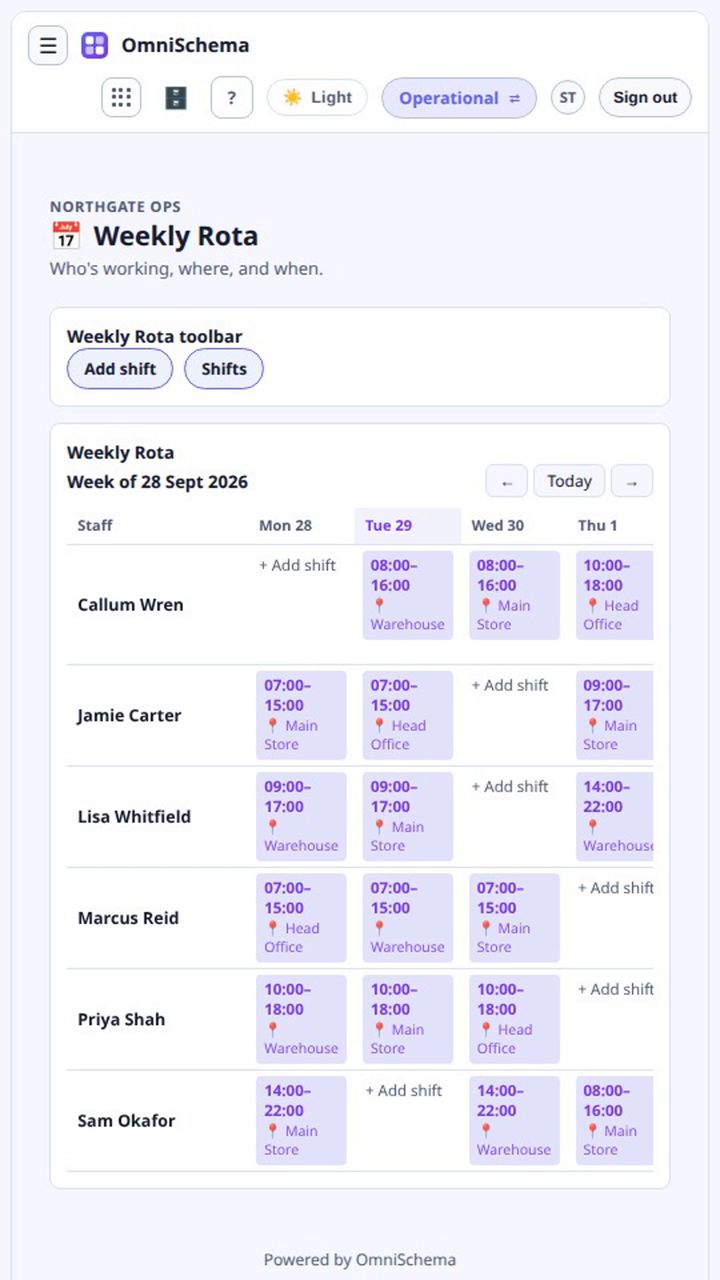
OmniSchema's Weekly Rota shows every person's shifts with start and end times on one screen, week by week or across a month. That makes it much easier to spot someone working too many days in a row, or a late finish followed by an early start, before the rota goes out.